
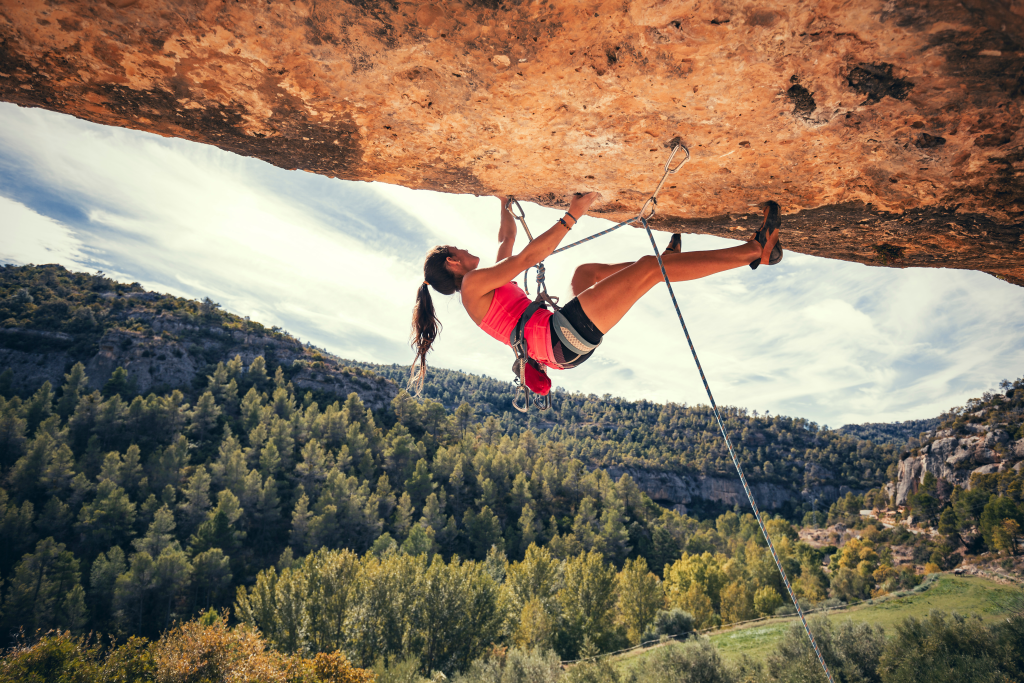
5.13a to V Scale: Climbing Grade Conversion Guide
Contents
- Key Takeaways
- What Does 5.13a Mean in Climbing?
- Understanding the Yosemite Decimal System (YDS)
- Technical Grade and the Crux
- Climbing Difficulty at the 5.13a Level
- V Scale and Its Role in Bouldering
- What Is the V Scale?
- V8 and Benchmark Bouldering Grades
- Using the V Scale in Climbing Areas
- How to Convert 5.13a to V Scale
- Conversion Tables and Grade Equivalents
- Interpreting 5.13a in Bouldering Grades
- Factors Affecting Grade Conversions
- Similar Grade Comparisons Across Systems
- 5.13a Compared to French, Font, and UIAA
- British Trad Grade and Ewbank Equivalents
- Other International Systems
- Influencing Factors on Grade Conversion
- Rock Type and Climbing Area Variations
- First Ascensionist and Consensus
- Subjectivity in Grading
- Applications and Uses of Grade Conversions
- Training and Progression
- Outdoor Versus Indoor Climbing
- Route Setting and Competition Contexts
- Frequently Asked Questions
- How does the 5.13a climbing grade compare to the V scale in bouldering?
- What is the equivalent V scale grade for a 5.13a sport climb?
- Which bouldering grade corresponds to the difficulty of a 5.13a route?
- What V grade should I aim for if I can climb 5.13a routes comfortably?
- Sources
Rock climbing and bouldering use different grading systems to measure difficulty. When climbers move between rope climbing and bouldering, they need to understand how these grades relate to each other.
A 5.13a grade in the Yosemite Decimal System converts to approximately V6 or V7 on the V Scale used for bouldering. The conversion isn’t exact because rope climbing and bouldering test different skills. Rope routes measure sustained difficulty over longer distances, while bouldering grades focus on short, powerful problems.
Understanding these conversions helps climbers set realistic goals and track progress across different climbing styles. The relationship between grades gives climbers a reference point when switching between rope climbing and bouldering.
Key Takeaways
- A 5.13a climbing grade converts to roughly V6 or V7 on the bouldering scale
- Different grading systems measure distinct aspects of climbing difficulty and cannot be perfectly matched
- Knowing grade conversions helps climbers transition between rope climbing and bouldering disciplines
What Does 5.13a Mean in Climbing?
The 5.13a grade represents an advanced level of climbing difficulty in the Yosemite Decimal System, requiring exceptional strength, technique, and mental focus. This rating applies to both sport climbing and trad climbing routes where climbers face sustained technical challenges.
Understanding the Yosemite Decimal System (YDS)
The Yosemite Decimal System, or YDS, is the standard grading system used in North America to rate rock climbing difficulty. The system starts at 5.0 for basic climbing and extends to 5.15d, which represents the hardest routes climbed to date.
The “5” in 5.13a indicates the route requires technical free climbing with rope protection. The number after the decimal point shows the specific difficulty level. Once routes reach 5.10 and above, letters (a, b, c, d) provide more precise difficulty ratings within each number grade.
A 5.13a sits near the upper end of the climbing grade spectrum. Most recreational climbers never reach this level, as it demands years of dedicated training and natural ability.
Technical Grade and the Crux
The technical grade of 5.13a describes the hardest move or sequence on the entire rock route, known as the crux. A climb receives its rating based on this most difficult section, even if the rest of the route is easier.
At 5.13a, the crux typically involves powerful dynamic movements, small holds, or complex sequences that test a climber’s limits. The climber must link multiple difficult moves together without falling. Some routes have a single hard crux, while others feature sustained difficulty throughout.
Climbing Difficulty at the 5.13a Level
Routes at 5.13a require mastery of advanced climbing techniques and significant finger strength. Climbers at this level typically train specifically for these grades, working on campus boards, hangboards, and system walls.
The climbing difficulty demands precise footwork, body positioning, and the ability to rest on small holds. Most climbers need multiple attempts to complete a 5.13a route, studying the moves and building the specific strength required. Both sport climbing and trad climbing routes at this grade present serious physical and mental challenges that separate elite climbers from intermediate ones.
V Scale and Its Role in Bouldering
The V Scale originated in America and remains a dominant grading system for bouldering problems in many climbing areas worldwide. V8 represents a significant milestone where climbers demonstrate advanced technical skills and power.
What Is the V Scale?
The American V-Scale is a grading system that John “Vermin” Sherman formalized for his 1991 Hueco Tanks guidebook, according to Climbing magazine. It starts at V0 for beginner routes and currently reaches V17 for the world’s hardest problems.
The scale uses whole numbers without letter subdivisions. A V3 is harder than a V2. Some gyms and guidebooks add plus or minus signs, but most bouldering grades stick to whole numbers.
Bouldering grades on the V Scale focus on the hardest single move or sequence on a problem. A boulder problem only needs one very difficult section to earn a high grade. The scale accounts for power, technique, and problem-solving skills.
V8 and Benchmark Bouldering Grades
V8 marks an important threshold in bouldering ability. Climbers who reach this level have developed strong finger strength, body tension, and movement skills. Most V8 problems require years of consistent training.
The following table shows how V8 fits into the broader progression:
| V Grade | Skill Level | Typical Experience |
|---|---|---|
| V0-V2 | Beginner | 0-6 months |
| V3-V5 | Intermediate | 1-3 years |
| V6-V8 | Advanced | 3-5 years |
| V9+ | Expert | 5+ years |
Problems at V8 often include small holds, dynamic movements, and sustained sequences. They separate recreational climbers from dedicated athletes.
Using the V Scale in Climbing Areas
Climbing areas across the United States rely on the V Scale as their primary bouldering grade system. Popular destinations like Hueco Tanks, Bishop, and Rocky Mountain National Park all use V grades for their boulder problems.
Grades can vary between different climbing areas. A V5 in one location might feel like a V6 somewhere else. Rock type, weather conditions, and local climbing communities all influence how problems get graded.
Guidebooks and apps display boulder grades using the V Scale to help climbers choose appropriate problems. Climbers should try several problems at a grade before judging their ability level. Sandbagged problems receive harder grades than their difficulty suggests, while soft problems get easier ratings.
How to Convert 5.13a to V Scale
A 5.13a route on the Yosemite Decimal System translates roughly to V6-V7 on the V-Scale, though direct conversion between rope climbing and bouldering grades requires understanding the differences between these grading systems.
Conversion Tables and Grade Equivalents
Most route-to-boulder comparisons place 5.13a between V6 and V7 on the V-Scale. The French sport grade equivalent is 7c+, with 5.13a/b sliding toward 8a on Mountain Project's grade chart. On the Fontainebleau (Font) bouldering scale, V6 to V7 equals 7A to 7A+.
Understanding how different systems relate becomes much easier when you read this guide on understanding rock climbing grades, which clearly explains YDS, V-Scale, and how grades are assigned.
| YDS Grade | V-Scale | French Sport | Font Scale |
|---|---|---|---|
| 5.12d | V6 | 7c | 7A |
| 5.13a | V6-V7 | 7c+ | 7A/7A+ |
| 5.13b | V7-V8 | 8a | 7A+/7B |
Popular climbing resources like Mountain Project and TheCrag publish grade comparison charts that help climbers compare different grading systems.
The conversion remains approximate because rope climbing grades measure sustained difficulty over longer routes. Bouldering grades focus on short, intense sequences.
Interpreting 5.13a in Bouldering Grades
Converting 5.13a to bouldering grades means identifying the crux sequence difficulty rather than the overall route grade. A 5.13a route might contain a V6 boulder problem as its hardest section, with easier climbing before and after.
Bouldering V-Scale grades measure pure difficulty over 4-12 moves. Route grades account for endurance, rope clipping, and sustained climbing over 30-100 feet.
A climber who can boulder V7 might struggle on a 5.13a route due to endurance demands. Conversely, a strong route climber at 5.13a might find V7 boulders challenging because of the higher peak difficulty.
Factors Affecting Grade Conversions
Climbing grade conversions vary based on climbing style and rock type. Overhang specialists might find 5.13a on steep terrain closer to V6, while technical face climbers may see it as V7.
Regional grading differences also affect conversions. Some crags have a reputation for stiff grades and others for soft ones.
Individual strengths create personal conversion variations. Height, flexibility, and finger strength all influence how someone experiences grade equivalents across different climbing styles.
Similar Grade Comparisons Across Systems
A 5.13a climbing grade translates differently across international systems, with a French sport grade of 7c+, V-scale bouldering grades around V6-V7, and variations in British and other regional scales. Understanding these conversions helps climbers gauge difficulty when traveling or reading route descriptions from different countries.
5.13a Compared to French, Font, and UIAA
The French sport grade system rates a 5.13a climb as 7c+. A route graded 5.13a/b often lands at 8a, and the exact conversion depends on the route’s characteristics and regional grading standards.
The Fontainebleau scale (Font scale) applies mainly to bouldering rather than rope climbing. When comparing bouldering problems to sport routes, a 5.13a correlates roughly to V6 or V7 boulder problems, or Font 7A to 7A+. This comparison isn’t exact because bouldering and sport climbing demand different skills.
The UIAA scale uses Roman numerals for grading. A 5.13a converts to approximately IX+ on the UIAA grade system. UIAA grades appear less frequently in modern guidebooks, but climbers still encounter them in Alpine regions and older European climbing areas.
| System | 5.13a Equivalent |
|---|---|
| French Sport | 7c+ |
| Font/V-Scale | 7A to 7A+ / V6 to V7 |
| UIAA | IX+ |
British Trad Grade and Ewbank Equivalents
British trad grades use two components: an adjectival grade and a technical grade. A 5.13a sport climb translates to roughly E6 6c in the British system. The adjectival grade (E6, E7) reflects overall seriousness and commitment. The technical grade (6b, 6c) indicates the hardest individual moves.
Traditional routes at this level involve significant mental challenges beyond pure difficulty. Protection quality, fall potential, and route finding affect the adjectival grade substantially.
The Ewbank system from Australia rates 5.13a as approximately grade 29. The Ewbank grade provides a single number without separate ratings for protection or commitment. This system appears primarily in Australian guidebooks and on routes in New Zealand.
Other International Systems
South African climbers use a numerical system where 5.13a equals approximately grade 29. This scale closely mirrors the Ewbank system.
Brazil and the Saxon sandstone areas of Germany also have their own grading systems. Check a local guidebook for exact equivalents, since these scales reflect local rock and protection traditions.
Influencing Factors on Grade Conversion
Converting 5.13a to the V scale involves more than simple math. The rock type, location, and human judgment all affect how a grade translates from one system to another.
Rock Type and Climbing Area Variations
Different rock types create distinct movement styles that affect grade comparisons. Granite often requires precise footwork and balance, while sandstone may demand more compression strength. Limestone frequently features pockets and tufas that change how hard a climb feels.
Climbing areas develop their own grading standards over time. Climbers often say routes at the Gunks in New York feel stiffer than those at the Red River Gorge in Kentucky. A 5.13a at Smith Rock might translate differently than a 5.13a in Yosemite.
Weather and environmental factors also play a role. Hot and humid areas produce polished holds that increase climbing difficulty. Cold, dry conditions provide better friction and can make grades feel softer.
First Ascensionist and Consensus
The first ascensionist assigns the initial grade based on their personal experience and ability. A climber who excels at powerful moves might rate a route easier than someone who specializes in endurance climbing.
Over time, other climbers repeat the route and offer feedback. This consensus helps refine the grade to reflect broader community standards. Routes may get upgraded or downgraded as more people climb them.
Online databases and guidebooks track these consensus grades. A grade usually becomes more reliable as more ascents confirm the difficulty level.
Subjectivity in Grading
Individual strengths and weaknesses create personal bias in grading. A tall climber might find certain sequences easier than a shorter climber would. Someone with strong fingers rates crimpy routes softer.
Style preferences matter significantly. A boulderer attempting a sustained route might struggle with endurance even if individual moves feel manageable. A route climber may find short, intense boulder problems harder to grade accurately.
Objective dangers like poor protection or loose rock are usually described separately from the technical grade. The V scale focuses purely on the physical difficulty of movement.
Applications and Uses of Grade Conversions
Converting between 5.13a and V-scale grades helps climbers compare boulder problems to sport routes, plan training programs, and understand difficulty levels across different climbing styles. These conversions matter most when switching between rope climbing and bouldering or when traveling to areas that use different grading systems.
Training and Progression
Climbers use grade conversions to track their progress across both bouldering and sport climbing. A climber working on 5.13a sport routes can estimate their bouldering ability falls around V6 to V7. This comparison helps them set realistic goals when switching between disciplines.
Training programs often include both rope climbing and bouldering. Converting grades allows climbers to balance their workouts appropriately. Someone projecting a 5.13a route might work V5-V6 boulder problems to build power without overtraining.
Outdoor climbing benefits from understanding these conversions when planning trips. A climber comfortable with V6 boulders knows they can likely attempt 5.13a sport routes at a new crag. This knowledge prevents wasted time on routes that are too easy or impossibly hard.
Outdoor Versus Indoor Climbing
Indoor gyms sometimes grade climbing routes softer than outdoor equivalents. A gym V6 might feel closer to an outdoor V4 or V5. Converting between sport grades and boulder grades becomes harder when gym ratings don’t match outdoor standards.
Outdoor climbing routes follow more consistent grading systems. Rock climbing grades developed outdoors remain the standard for comparison. Climbers visiting new outdoor areas use conversions to estimate difficulty when unfamiliar with local grading.
Mixed climbing grade systems and aid climbing grades don’t convert directly to 5.13a or V-scale ratings. These disciplines involve different skills and equipment. Aid climbing grade systems measure how much equipment assists the climb rather than pure difficulty.
Route Setting and Competition Contexts
Competition organizers use grade conversions when designing events that include both boulder problems and lead routes. They balance difficulty so climbers face similar challenges across formats. A competition might pair V6-V7 boulders with 5.13a-5.13b lead routes.
Route setters in gyms apply conversions to create balanced climbing areas. They ensure the boulder section matches the rope climbing section in difficulty progression. This helps members train effectively across both styles.
Sport grades and boulder grades serve different purposes in competitions. Bouldering competitions focus on powerful, short sequences while lead climbing tests endurance. Conversions help athletes prepare for multi-discipline events without guessing at difficulty levels.
Frequently Asked Questions
Converting between the 5.13a sport climbing grade and V scale bouldering grades isn’t exact, but most climbers find that 5.13a relates to V6-V7 difficulty, most often around V6.
How does the 5.13a climbing grade compare to the V scale in bouldering?
The 5.13a grade measures rope climbing difficulty over longer routes, while the V scale rates short, powerful boulder problems. These systems evaluate different skills and physical demands.
A 5.13a route typically requires sustained endurance and technical movement over 40-100 feet. Boulder problems focus on intense, powerful sequences that last only 10-20 feet or a few hard moves.
The climbing community generally agrees that 5.13a difficulty falls somewhere between V6 and V7. This range exists because rope climbing and bouldering demand different strengths.
What is the equivalent V scale grade for a 5.13a sport climb?
Most conversion charts place 5.13a between V6 and V7 in terms of raw difficulty. However, the comparison depends on individual climbing style and strengths.
A climber who excels at endurance might find 5.13a easier than V6 boulders. Someone with excellent power might crush V7 problems but struggle on 5.13a routes.
The most common equivalency used by climbers is V6 for 5.13a. This assumes the climber has balanced skills in both endurance and power.
Which bouldering grade corresponds to the difficulty of a 5.13a route?
V6 represents the lower end of the usual comparison to 5.13a. V7 marks the upper end of the range.
Route style plays a role in these comparisons. A technical, crimpy 5.13a might feel closer to V7, while a juggy, endurance-focused 5.13a could feel like V5.
Indoor gym grades often differ from outdoor grades, which affects these conversions. Outdoor 5.13a climbs typically feel harder than indoor routes with the same rating.
What V grade should I aim for if I can climb 5.13a routes comfortably?
Climbers who consistently send 5.13a routes should target V6 boulder problems as a reasonable goal. This grade matches well with the technical difficulty and finger strength needed for 5.13a.
Working on V7 projects makes sense for climbers looking to push their limits. The increased difficulty helps build the power and technique that translates back to harder sport routes.
V5 boulders serve as good warm-ups or endurance training for 5.13a climbers. These problems provide quality movement practice without excessive strain.
Sources
- International Climbing Grade Comparison Chart, Mountain Project
- 10 Things You Didn't Know about Bouldering Grades, Climbing
- International Climbing Grades: Everything You Need to Know, Climbing


